How to Breathe with RE: Your Guide & Practice Video
Informational and self-regulation purposes only. Not a medical device.
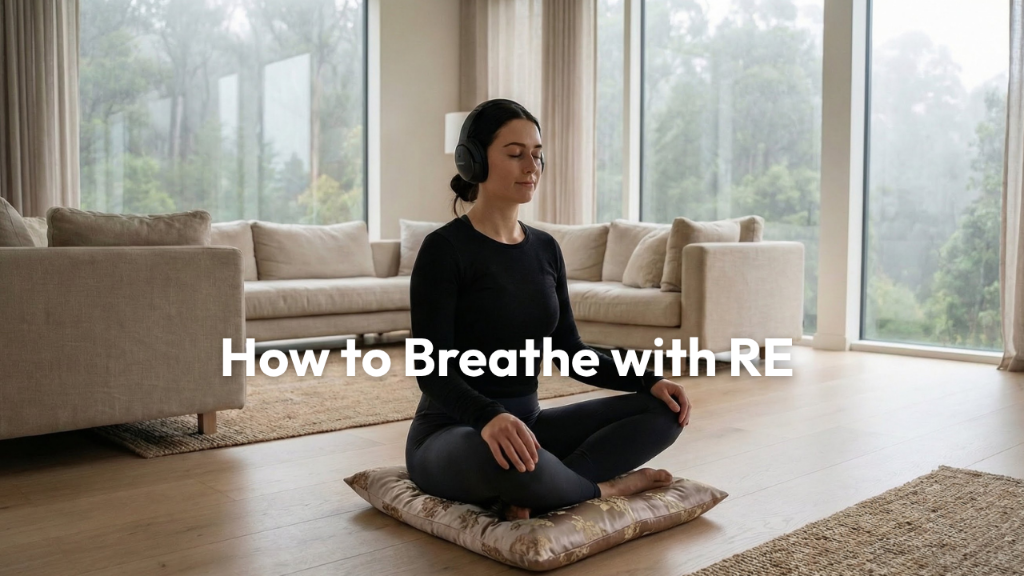
At a Glance
- 01Follow subtle audio pitch shifts: rising high tone for inhale, falling low tone for exhale.
- 02No screen watching required, keeping your eyes rested and lowering cognitive load.
- 03Paced near 5.5s to align with your autonomic baroreflex for optimal HRV coherence.
- 04Start with 3 to 5 minutes daily in a comfortable position without postural strain.
Starting a new breathing practice should feel welcoming and approached with a spirit of curiosity. You do not need years of meditation experience, special postures or the right incense.
The RE app is designed to make physiological regulation effortless. Rather than forcing you to watch a visual shape on a screen, RE uses responsive sound cues. As the sound expands into a higher tone, you breathe in. As the tone lowers and contracts, you breathe out. Your eyes can stay closed, your muscles can relax, and your mind gets a break from screen tension.
Here is a pithy breakdown of how to prepare, how to follow the sound cues, and how to make every session feel easeful.
How to Practice: Step-by-Step Guide
A Comfortable Position
Settle into a comfortable seated or lying position. You do not need to force a cross-legged posture or keep a rigid spine. Let your shoulders drop, unclamp your jaw, and let your body settle.
Helpful Hint: If sitting up makes your lower back tense, lie flat on your back with a pillow under your knees. Physical ease allows your nervous system to downregulate without postural strain.
Your Breath with the Sound
Inhale through your nose as the audio soundscape expands with a rising high tone. Exhale gently through your nose as the sound contracts back into a low tone.
Interesting Fact: Breathing through your nose releases nitric oxide into your airways. This compound opens pulmonary blood vessels and improves oxygen transport across your lungs.
Continuous, Wave-Like Breath
Let your breath flow continuously like a rolling wave. Do not hold or pause at the top of the inhale or at the bottom of the exhale. Turn smoothly at each pivot point.
Helpful Hint: Avoiding pauses keeps your heart rate variability moving in a smooth sinusoidal wave. Pauses create abrupt pressure spikes that disrupt smooth baroreflex pacing.
Gentle Attention and Return
When your mind inevitably wanders to daily tasks or thoughts, simply notice it without judgement. Gently return your attention to the feel of your breath and the rising and falling tone.
Interesting Fact: Wandering thoughts are not a failure of practice. Every time you notice a thought and redirect attention, your brain strengthens neural pathways for self-regulation.
Watch the Guided Practice Video
Experience how the rising high tone and falling low tone pair with smooth wave breathing in this short demonstration video.
Fascinating Facts & Practical Tips
Why Audio Pitch Works Better Than Screens
Your auditory system processes pitch changes faster than your visual system interprets moving shapes. Auditory pacing allows your eyes to stay closed, preventing visual fatigue and lowering cognitive load.
The 5.5-Second Standard
Breathing at roughly 5.5 to 6 breaths per minute aligns your respiration rate with your body's baroreflex blood pressure rhythm (0.1 Hz). This creates optimal heart rate variability (HRV) coherence.
Start Small and Build Consistency
Even 3 to 5 minutes of resonant breathing shifts your autonomic nervous system from sympathetic arousal into vagal recovery. You do not need long, grueling sessions to feel a real physical difference.
Listen to Your Body's Comfort
If 5.5 seconds feels too long or causes mild air hunger, adjust the pace in RE settings to 4.5s or 5.0s. Your practice should always feel comfortable and sustainable.
Reclaim Your Practice
You deserve tools that respect your intelligence and your privacy. By removing visual screen fatigue and focusing on responsive sound cues, RE helps you find physical stillness effortlessly.
DOWNLOAD RE