At a Glance
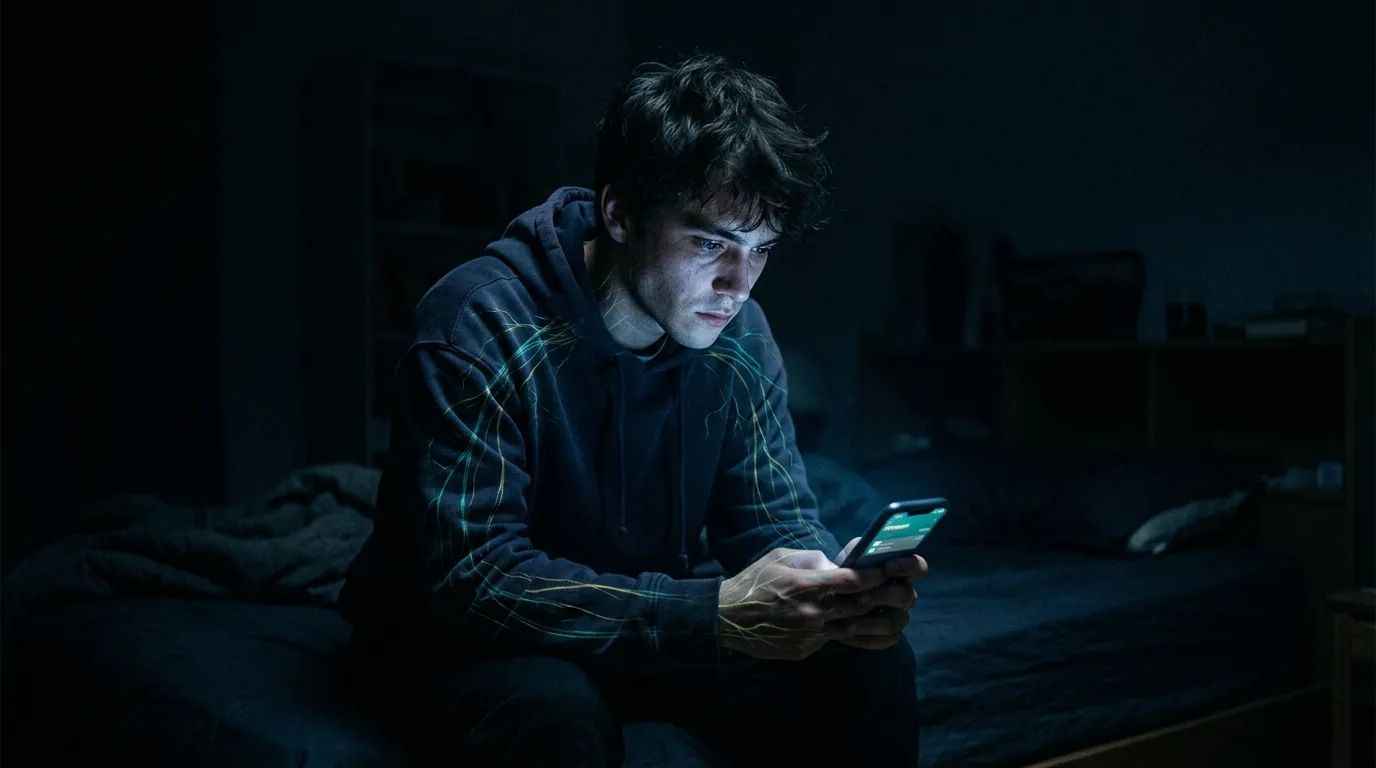
Each notification is a brief orienting response: a small sympathetic spike that, repeated dozens of times a day, adds up.
Doomscrolling lacks a resolution signal. The amygdala never gets the all-clear, so cortisol stays elevated longer than it should.
Evening blue light suppresses melatonin and delays circadian phase, compressing the overnight window in which the autonomic nervous system recovers.
What drives the load is the architecture of compulsive engagement layered on top of the screen, not the screen itself.
How App Design Creates Sustained Arousal
Screens themselves do not inherently dysregulate the nervous system. A 2024 randomised crossover trial by Oppenheimer and colleagues found that a 20-minute session of social media or YouTube viewing produced no significant acute change in heart rate or salivary cortisol under controlled conditions.[5] Short, intentional device use is physiologically manageable.
What makes modern apps physiologically different from neutral screen time is deliberate design. Variable-ratio reward schedules, the same mechanism that makes slot machines compelling, are built into notification systems, infinite scroll, and social validation loops. Montag et al. documented in 2019 how these features exploit the brain's anticipatory dopamine system: the reward is not the notification itself, but the unpredictability of whether this one will matter.[1] That uncertainty keeps the orienting response active.
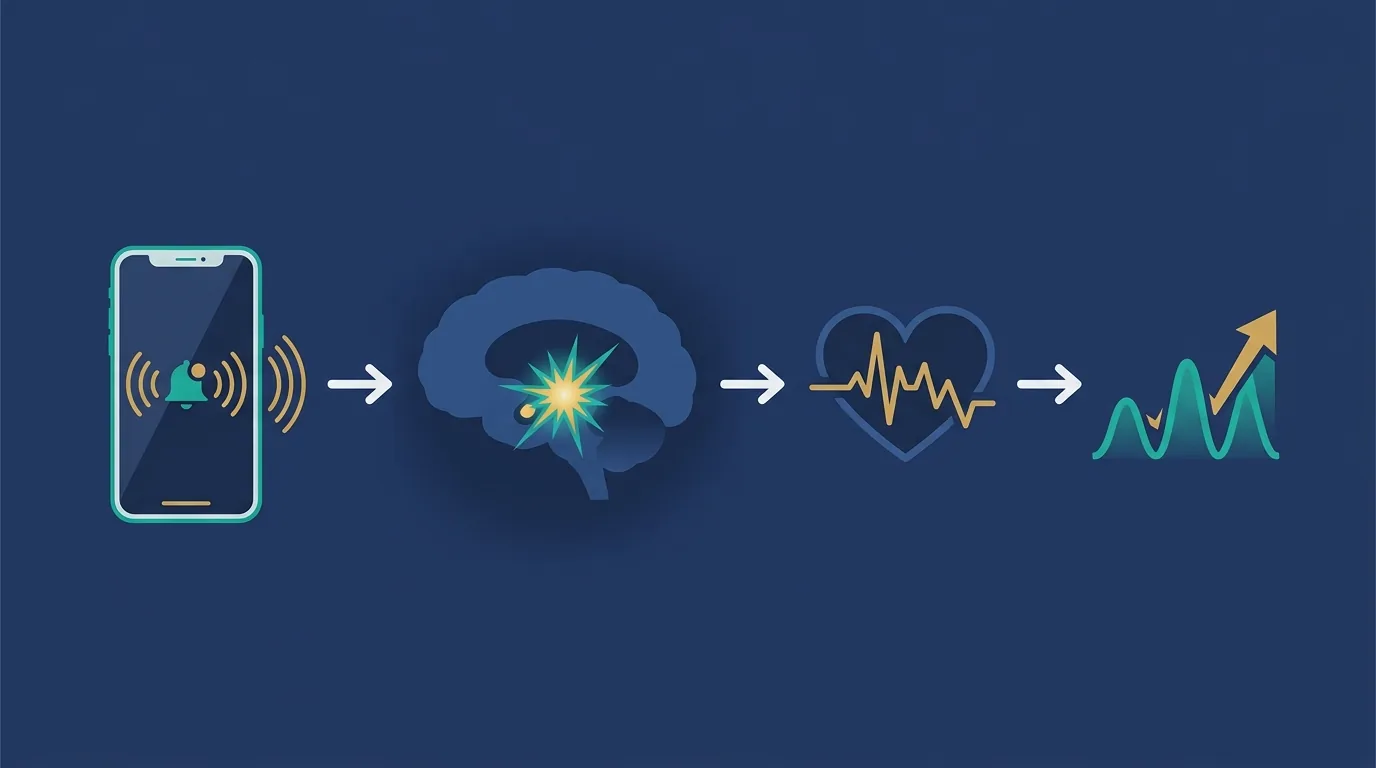
Each notification activates a brief orienting response. Repeated across a day, the cumulative sympathetic load is significant.
Notifications accumulate as sympathetic load
Each time the phone pings, the nervous system produces a brief orienting response: a small, reflexive shift toward sympathetic activation as the brain rapidly assesses whether the signal is relevant. Individually, these micro-arousals are trivial. Repeated across the dozens of notifications a typical day delivers, they keep the autonomic nervous system in a low-grade alert state for a large part of the waking day, rather than the parasympathetically dominant baseline associated with good recovery.
Ekici and colleagues compared 148 healthy adults grouped by daily phone use and found the pattern you would expect from that load: median RMSSD fell from 37 ms in non-users to 25 ms in those using their phone more than an hour a day, high-frequency power dropped by roughly two-thirds, and the LF/HF ratio nearly tripled.[2] This shift reflects lowered vagal tone and relative sympathetic dominance. RMSSD (the root mean square of successive R-R interval differences) is the primary time-domain measure of parasympathetic activity and the same metric tracked by RE's Recovery score. A lower baseline RMSSD describes a nervous system that is less flexible and slower to restore equilibrium after a stressor.[3]
Doomscrolling has no resolution signal
The amygdala, the brain's threat-detection system, does not distinguish well between a physical danger and a digital one. When a feed surfaces something threatening, the HPA axis activates. Cortisol rises. This is the same machinery that evolved to handle a predator encounter. The critical difference is that a predator encounter has an ending: the threat resolves, the body gets a safety signal, and cortisol clears.
Infinite scroll has no ending. There is always one more item, and it is usually designed to provoke. Without a resolution signal, the HPA axis does not reset cleanly. The feed keeps supplying the brain with material it reads as unresolved threat, which is the opposite of the conditions cortisol needs to clear.
The Oppenheimer result cuts against this, and it should be taken seriously. In controlled 20-minute sessions, cortisol did not significantly spike.[5] But real-world use is neither controlled nor bounded, so the null result sets a ceiling for what brief, finite exposure does to a healthy adult. Compulsive multi-hour engagement is a different physiological proposition.
Evening screens delay the autonomic recovery window
The nervous system's primary restoration happens overnight. Slow-wave sleep is when the parasympathetic branch dominates, heart rate variability is highest, and the body clears the physiological residue of the day. Evening screen use, particularly at close viewing distances, compresses this window in two connected ways.
First, the blue-enriched light from displays (peak wavelength roughly 450 nm) acts through intrinsically photosensitive retinal ganglion cells to signal the suprachiasmatic nucleus that it is still daytime. Melatonin secretion, normally rising from around 21:00, is suppressed. Sleep onset is delayed. A systematic review by Tähkämö et al. confirmed that both the timing and spectral composition of light exposure reliably shift circadian phase, with evening blue-light exposure being among the more potent inputs to the system.[4]
Second, the content itself keeps the sympathetic branch engaged. Checking email, reading contentious posts, or watching high-stimulus video at 23:00 is not a neutral act on the autonomic system, regardless of whether the screen is night-shifted. A warm colour temperature does nothing about what you are reading.
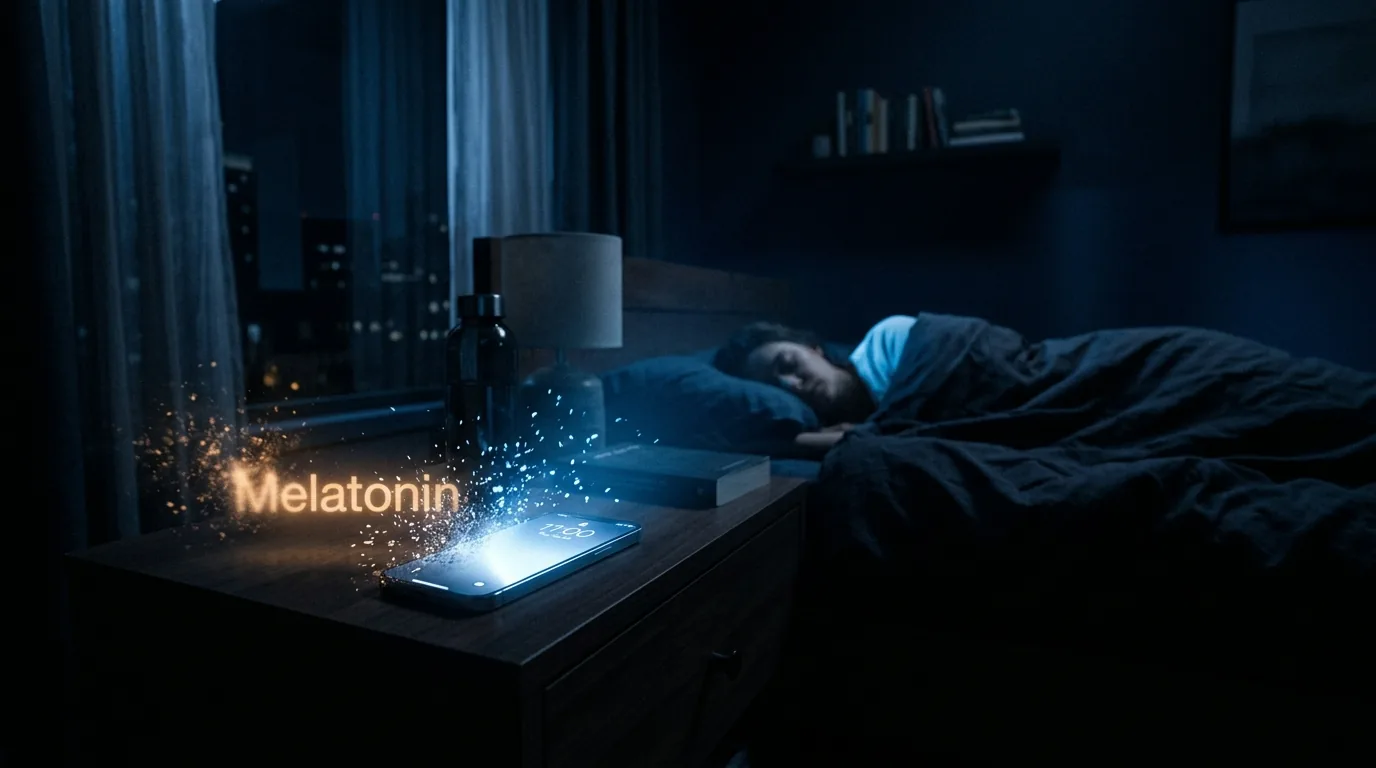
Evening blue light suppresses melatonin and delays sleep onset, shrinking the overnight window when the autonomic nervous system restores itself.
Reducing use does not immediately help
A 2025 secondary analysis by Dale and colleagues produced a counterintuitive finding. University students were randomised to cut their daily phone use, and among the 45 who provided usable Fitbit data, HRV significantly declined during the intervention compared with their own baseline.[6] One reading is a withdrawal-like physiological response, of the kind seen when other behavioural reinforcers are removed abruptly.
The case for reducing compulsive use survives this. What it complicates is the expectation that the nervous system will feel better the moment the stimulus is removed. Recovery is non-linear, and what the body has been conditioned to expect takes time to recalibrate.
What the evidence can and cannot show
Most HRV and smartphone studies are cross-sectional: they show that heavy users have lower RMSSD, but cannot cleanly establish causation. People who are chronically stressed may reach for phones more often, rather than phones driving the stress. Sedentary behaviour, which correlates strongly with screen time, independently suppresses HRV. Self-reported screen time also reliably underestimates actual use. Isolating what device behaviour specifically contributes, separate from lifestyle, remains methodologically hard.
The mechanisms themselves are documented separately. Evening blue-light exposure shifts circadian timing. Unpredictable notifications trigger repeated orienting responses. Doomscrolling keeps threat-appraisal systems active without giving them a resolution. The combined quantitative dose-response is harder to pin down, but each mechanism has its own evidence base.
The practical implication is about structure rather than total hours. Bounded use, predictable content, and an evening protected from high-stimulus engagement address the mechanisms directly, without requiring anyone to abandon their devices. It requires knowing what the nervous system is actually responding to.
How RE fits in
RE's Recovery score tracks RMSSD across 7-day rolling windows, which means the cumulative impact of sustained sympathetic load shows up in the data before it shows up as fatigue or brain fog. The Morning Baseline scan, taken before the phone's notification feed is opened, gives the clearest read on overnight autonomic recovery. Resonant-frequency breathing at 0.1 Hz is one of the more efficient ways to drive parasympathetic tone during the day, directly countering the low-grade arousal that digital engagement creates. It addresses the physiology rather than the habit, so it works alongside structural change instead of replacing it.
What RMSSD actually measuresUnplug & Reconnect
Give your nervous system a break from digital noise. Turn 5 minutes of screen time into a physiological reset with RE.
Download REReferences
Addictive Features of Social Media/Messenger Platforms and Freemium Games against the Background of Psychological and Economic Theories
Montag, C., Lachmann, B., Herrlich, M. & Zweig, K. (2019). International Journal of Environmental Research and Public Health, 16(14), 2612.
The effects of the duration of mobile phone use on heart rate variability parameters in healthy subjects
Ekici, B., Tanındı, A., Ekici, G. & Diker, E. (2016). Anatolian Journal of Cardiology, 16(11), 833–838.
An Overview of Heart Rate Variability Metrics and Norms
Shaffer, F. & Ginsberg, J. P. (2017). Frontiers in Public Health, 5, 258.
Systematic review of light exposure impact on human circadian rhythm
Tähkämö, L., Partonen, T. & Pesonen, A-K. (2019). Chronobiology International, 36(2), 151–170.
Social media does not elicit a physiological stress response as measured by heart rate and salivary cortisol over 20-minute sessions of cell phone use
Oppenheimer et al. (2024). PLOS ONE, 19(4), e0298553.
The influence of smartphone reduction on heart rate variability: a secondary analysis from a randomised controlled trial
Dale, R., Haider, K., Majdandžić, J., Hoenigl, A., Schwab, J. & Pieh, C. (2025). Health Psychology and Behavioral Medicine, 13(1).