At a Glance
- 01Every major contemplative tradition treats conscious intention before practice as part of the practice itself.
- 02The brain runs on prediction. Pre-session orientation modulates cardiac response via prefrontal-brainstem pathways.
- 03Joe Dispenza's heart-brain coherence framework aligns with central autonomic network mechanics.
- 04Intention points in a direction without setting a performance target that reintroduces striving.
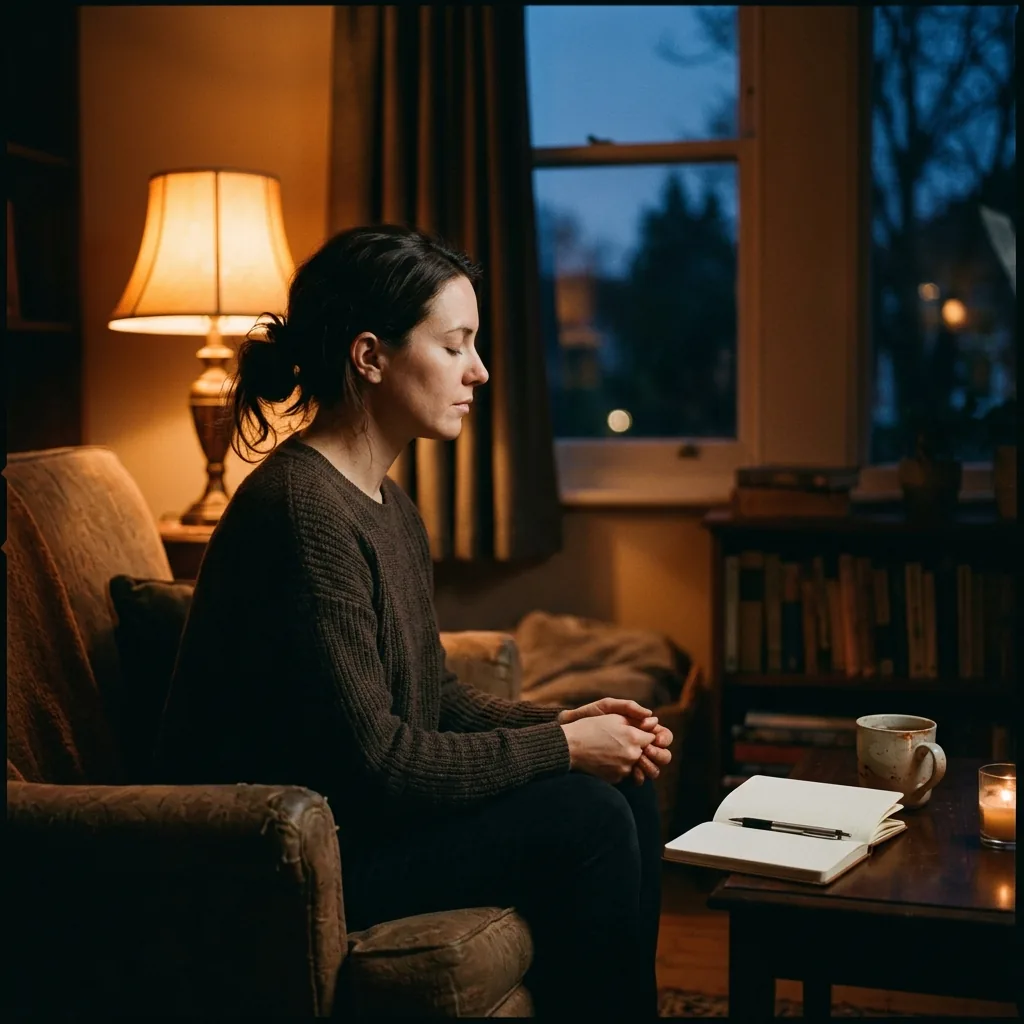
There is a moment between opening an app and pressing Start that most people treat as a gap. A few seconds of hovering, of half-attention, before the real work begins. For a long time, I treated it that way too.
Every contemplative tradition I have since read about treats that pause as essential. They disagree on many details, but they converge on this single principle: what you bring to the start of a practice determines what the practice delivers.
What the traditions knew
The Sanskrit word sankalpa translates as intention, though the root meaning goes deeper. San refers to alignment with truth, while kalpa means a resolve or vow. A sankalpa is not a goal set by the ego. It is a conscious orientation formed before meditation or Yoga Nidra so that the practice moves in a clear direction. The equal-breath tradition shares this lineage. Yogic teachers understood that the mind needs an anchor beyond mechanical counting. Rules address the form, while a sankalpa addresses the purpose.
Buddhism approaches intention through cetana, defined in Pali psychology as the primary mental factor directing consciousness. From the Nibbedhika Sutta: "Intention, I tell you, is kamma. Intending, one does kamma by way of body, speech, and intellect." Intention is not merely a prelude to action; it is the seed of the action itself.
In Taoist internal arts, the concept is called yi, or directed attention. In Qigong practice, force achieves little compared to focus. The classic maxim states: where yi goes, qi follows. A practitioner who begins with a scattered mind experiences a different session than one who enters with settled clarity.
Tibetan traditions cultivate bodhicitta, the aspiration that practice benefits others alongside oneself. Setting this broader frame softens performance pressure, preventing the subtle anxiety of trying to get relaxation right.
"Intention, I tell you, is kamma. Intending, one does kamma by way of body, speech, and intellect."
— The Buddha, Nibbedhika Sutta, AN 6.63
From experience
My teacher said it early in our first course: "Intention is the whole path." At the time I wrote it down and moved on. I wanted to learn the technique and get straight to it.
Years later, my practice went flat. I was sitting daily, yet something had emptied out of the routine. I was showing up out of habit without naming a purpose. Meditation without volition is just sitting quietly.
When I started explicitly naming why I was sitting, even simple statements like "I am here to let the day go" or "I want to sit with what is difficult," the sessions regained their center. Naming your intent gives the practice a place to land.
Predictive processing and heart-brain coherence
Modern neuroscience reaches similar conclusions through physiological models. Under Karl Friston's Free Energy Principle, the brain operates as an active prediction engine. It generates top-down expectations about internal bodily states before sensory feedback arrives.
Tor Wager's neuroimaging research demonstrated that expecting a specific physiological change directly activates prefrontal regions that regulate brainstem nuclei, including the rostral ventrolateral medulla and nucleus tractus solitarius. These brainstem centers directly control vascular tone and vagal outflow to the heart.
Julian Thayer and Richard Lane mapped these pathways in their Neurovisceral Integration Model as the Central Autonomic Network. Prefrontal structures share direct bidirectional connections with the sinoatrial node via the vagus nerve. When you set a clear emotional orientation before breathwork, your top-down expectations align with the bottom-up signals of diaphragmatic movement, helping cardiovagal resonance lock in faster.
Where this started for me
Long before reading neurovisceral integration papers, I read Joe Dispenza's books Becoming Supernatural and Breaking the Habit of Being Yourself. His core observation was that an intellectual thought carries little physiological weight until paired with a clear, felt emotional state, a state he called heart-brain coherence.
While Dispenza often uses quantum metaphors outside mainstream scientific consensus, his underlying practical insight remains sound: the emotional quality brought to a session alters autonomic tone directly. What he observed clinically matches what Friston and Wager mapped through neuroimaging.
William James noted this long before brain imaging existed. In The Principles of Psychology (1890), he wrote that attention acts as a selective filter that determines what experience is made of. Naming an intention chooses that filter deliberately.
James Pennebaker's research further demonstrated that translating internal feeling into specific language produces measurable autonomic shifts. Specificity matters: stating "I want to release today's tension" gives the nervous system a clear focus compared to a vague desire to relax.
State shift versus trait change
In clinical biofeedback literature, researchers distinguish between a temporary state shift and a lasting trait change.
A state shift occurs during the session: heart rate variability rises, baroreflex sensitivity peaks, and parasympathetic activity increases. However, once daily demands resume, autonomic balance often returns to baseline.
A trait change represents structural adaptation. Over weeks of consistent practice, baseline vagal tone increases, resting heart rate lowers, and your 7-day HRV Balance corridor shifts upward. As Paul Lehrer and Richard Gevirtz showed in their HRV biofeedback studies, building lasting trait resilience requires repeated, coherent engagement of the baroreflex loop.
Intention plays a key role here. Practicing while mentally distracted produces irregular heart rhythms and lower coherence scores. Practicing with focused intention and emotional alignment allows the cardiovascular system to achieve steady resonance right from the start.
Direction, not destination
If an intention turns into a rigid performance target, it brings striving back into the session. "I intend to achieve deep calm" is a goal in disguise. The resulting effort recreates the tension you sat down to ease.
A true intention sets a direction rather than demanding an outcome. Process beats expectation: "I will gently return to the breath when my mind wanders" provides a supportive cue, whereas "I must not get distracted" sets up immediate frustration.
This is why RE prompts for an intention before each session and morning baseline scan. Taking ten seconds to name your purpose sets your nervous system in motion before the first paced breath.
Before your next session, take ten seconds and complete this sentence: I am here because... Whatever arrives is enough to begin.
Begin with intent
Before each RE session, you name what you are here for. That prompt is the first breath of practice.
Set your intent, start your session, and track your cardiac coherence in real time.
Download REScientific references & further reading
Important Note: This content is intended for informational and self-regulation purposes only. It is not a medical device and should not be used to replace professional medical advice, diagnosis, or treatment. Always seek the advice of your physician or other qualified health provider with any questions you may have regarding a medical condition.